
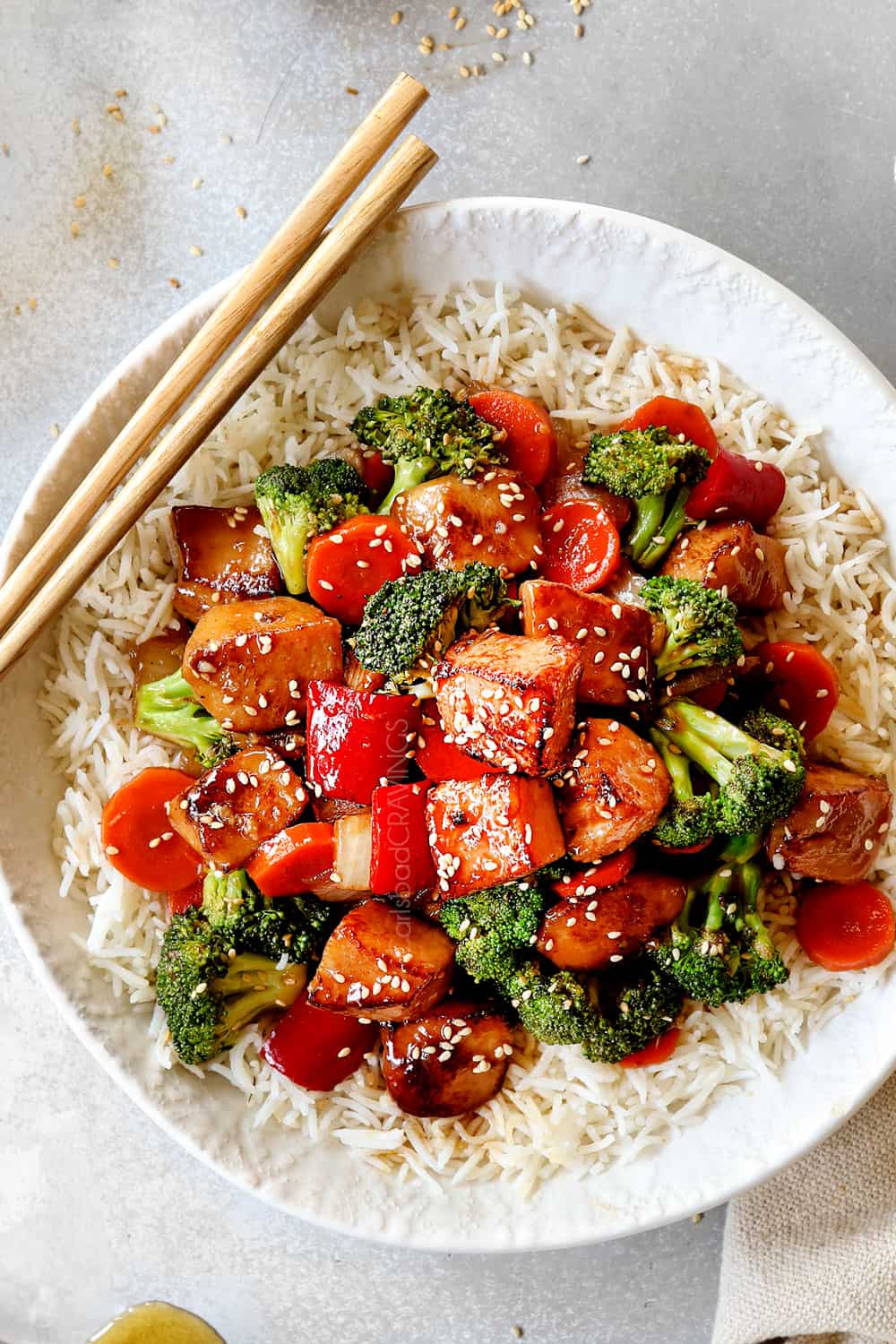
Honey Garlic Chicken Stir Fry is a delicious recipe that combines amazing flavors and textures.
Honey garlic chicken stir fry represents the perfect weeknight dinner solution, combining quick cooking technique with balanced flavors that please both adults and children alike. This dish features tender chicken and crisp vegetables coated in a glossy sauce that perfectly balances sweet honey, savory garlic, and subtle acidity, creating a harmony of flavors that feels both familiar and exciting. The genius of this recipe lies in its efficient use of time and ingredients, delivering maximum flavor with minimal effort and cleanup.

What makes this stir fry truly exceptional is its educational value in teaching fundamental cooking techniques. The process demonstrates proper marinating, high-heat searing, sauce balancing, and vegetable cooking – all essential skills that transfer to countless other dishes. This recipe serves as a perfect introduction to stir-fry cooking for beginners while still offering satisfaction for experienced cooks looking for a reliable quick meal. The dish embodies the principle that great cooking doesn’t require complexity, just understanding of basic techniques and quality ingredients.
The Evolution of Stir-Fry Cooking
Stir-frying has ancient Chinese origins dating back over 1,500 years, emerging as a efficient cooking method that conserved fuel while preserving texture and nutrients. The technique spread throughout Asia, evolving regional characteristics based on available ingredients and cultural preferences. The honey garlic combination represents a more recent Western adaptation that caters to familiar flavor profiles while maintaining cooking technique integrity.

The stir-fry method gained popularity in Western countries during the mid-20th century as part of growing interest in international cuisines. The dish represents how cooking techniques migrate across cultures while adapting to local tastes and ingredient availability. The honey garlic version perfectly demonstrates this cultural exchange, offering Asian cooking techniques with universally appealing flavors.

Ingredient Selection Guide
Chicken: Chicken thighs offer more flavor and remain juicier, but breasts work well sliced thinly against the grain. Partially freeze before slicing for easier, uniform cuts.
Cornstarch: Creates light coating that helps sauce adhere and promotes browning. Don’t skip this step as it significantly improves texture. Arrowroot can substitute if needed.

Sauce Components: Quality honey makes a difference – avoid overly processed varieties. Fresh garlic and ginger provide best flavor. Low-sodium soy sauce allows better control of saltiness.
Vegetables: Choose vegetables with similar cooking times or add in stages. Prepare all vegetables before starting to cook. Keep pieces uniform for even cooking.
The Science of Stir-Fry Technique
Perfect stir-fry requires understanding the Maillard reaction – the chemical process that creates browning and complex flavors at high heat. The cornstarch coating promotes this reaction while protecting the chicken from drying out.

The sauce thickens through starch gelatinization and reduction. Adding sauce at the end prevents burning of sugars. The high heat creates wok hei (breath of the wok) – the characteristic smoky flavor of properly stir-fried foods.
Step-by-Step Technique Mastery
Mise en Place: Prepare all ingredients before heating the wok. Stir-frying happens quickly with no time for prep once cooking starts. Have everything within reach.
Pan Heating: Get the pan very hot before adding oil. The oil should shimmer but not smoke. Work in batches if necessary to avoid crowding which causes steaming.
Layering Cooking: Cook protein first, remove, then vegetables, then combine everything with sauce. This ensures each component cooks properly without overcooking.
Sauce Addition: Add sauce around the edges of the pan rather than directly onto ingredients. Bring to boil before tossing to ensure proper thickening.
Flavor Development Secrets
Layer flavors throughout the cooking process. Marinate the chicken for better penetration. Bloom garlic and ginger in the oil before adding other ingredients. Season each component lightly.
Consider flavor boosters like a splash of sesame oil at the end, a teaspoon of chili garlic paste for heat, or orange zest for brightness. Toasted nuts add textural contrast.
For professional touch, finish with a drizzle of chili oil or a sprinkle of Szechuan peppercorns. Fresh herbs added at the end provide brightness and color.
Professional Presentation Techniques
For appealing presentation, create height by mounding stir-fry slightly. Garnish with colorful ingredients: green onions, red chili slices, white sesame seeds. Serve in contrasting colored bowls.
Arrange vegetables visibly around the edges. Pour extra sauce around rather than over for visual interest. Provide condiments on the side for customization.
For individual servings, pack rice into small bowls and invert onto plates. Arrange stir-fry around the rice. Wipe plate edges clean for restaurant appearance.
Nutritional Considerations
This dish can be modified for various dietary needs. Use reduced-sodium soy sauce, less honey or sugar substitute, and increase vegetable variety and quantity.
For specific diets: use tamari for gluten-free, honey alternatives for vegan, or adjust oil content for lower fat. The basic method adapts to many dietary patterns.
Add nutrient-dense ingredients like shiitake mushrooms, baby corn, water chestnuts, or bok choy. Serve with brown rice or cauliflower rice for added nutrition.
Storage and Freshness Preservation
Leftovers can be refrigerated for 4 days but vegetables will lose crispness. Reheat in wok or skillet rather than microwave to restore texture. Add splash of water or broth when reheating.
Components can be pre-prepped: vegetables chopped, sauce mixed, chicken marinated. Store separately and combine when ready to cook for best results.
Freezing is not recommended as vegetables become mushy upon thawing. The sauce may separate when frozen and reheated.
Cultural Significance and Modern Adaptations
Honey garlic chicken stir fry represents the globalization of Asian cooking techniques, adapted to Western tastes and ingredient availability. It embodies how culinary traditions evolve through cultural exchange while maintaining technical integrity.
Modern variations include regional adaptations: Thai with fish sauce and basil, Korean with gochujang, or Japanese with mirin and dashi. This adaptability ensures continued relevance across diverse culinary landscapes.
Final Thoughts
As you experience the perfect balance of sweet, savory, and umami flavors with contrasting textures, appreciate how this dish represents culinary excellence through technique rather than complexity. May this honey garlic chicken stir fry become a reliable favorite in your weeknight rotation, offering both nourishment and cooking education in every satisfying bite.
Honey Garlic Chicken Stir Fry
Ingredients
Method
- Toss chicken with cornstarch, soy sauce, rice wine, and pepper
- Let marinate 15 minutes while preparing other ingredients
- Whisk together honey, soy sauce, rice vinegar, hoisin, garlic, and ginger
- Set aside until ready to use
- Heat oil in wok or large skillet over high heat
- Add chicken in single layer, cook 2-3 minutes per side until browned
- Remove chicken and set aside
- Add vegetables, stir fry 2-3 minutes until crisp-tender
- Return chicken to pan, add sauce
- Bring to simmer and cook 1-2 minutes until sauce thickens
- Garnish with sesame seeds and green onions
- Serve immediately over rice