
One Pot Chicken Orzo is a delicious recipe that combines amazing flavors and textures.
One Pot Chicken Orzo represents the ideal weeknight meal – minimal cleanup, maximum flavor, and comforting satisfaction in every bite. This Mediterranean-inspired dish combines tender chicken, rice-shaped orzo pasta, and vibrant vegetables in a creamy sauce that comes together in under 30 minutes. The technique of cooking everything in a single pot allows the flavors to meld while the starch from the orzo creates a naturally luxurious sauce without heavy cream. Whether you’re feeding a family or meal prepping for the week, this versatile dish delivers restaurant-quality results with home kitchen simplicity.

The Science of One-Pot Cooking
One-pot cooking utilizes sequential addition of ingredients based on their cooking times, allowing everything to cook together while developing layered flavors. The fond (browned bits) left from searing the chicken dissolves into the broth, adding depth and complexity. The starch released from the orzo during cooking thickens the liquid, creating a creamy sauce without additional thickeners.
Cooking the orzo directly in the broth rather than in water allows it to absorb maximum flavor. The ratio of liquid to orzo is critical – too little results in crunchy pasta, too much makes the dish soupy. The absorption method used here ensures perfectly cooked orzo that has absorbed the flavorful cooking liquid while maintaining slight bite (al dente texture).

Orzo Characteristics


Orzo, meaning “barley” in Italian for its resemblance to the grain, is a rice-shaped pasta that behaves differently from traditional shapes. Its small size and high surface area allow it to release more starch during cooking, creating creaminess. The shape also allows it to cook quickly and evenly when properly hydrated.

Unlike rice, orzo contains gluten, which contributes to its ability to thicken sauces. Toasting the orzo before adding liquid enhances its nutty flavor through Maillard browning while helping it maintain structure during cooking. This step is crucial for preventing mushiness in the final dish.
Chicken Selection Science
Boneless, skinless chicken thighs are ideal for one-pot cooking because their higher fat content prevents drying out during the simmering process. The collagen in thighs breaks down into gelatin during cooking, adding body and richness to the sauce. Cubing the chicken increases surface area for browning while reducing cooking time.

The initial browning step is not just for color – it creates flavor compounds through the Maillard reaction that would not develop through boiling or steaming alone. Removing the chicken after browning prevents overcooking while allowing the fond to develop on the pan surface. The chicken finishes cooking gently in the simmering liquid, ensuring tenderness.
Broth as Flavor Foundation
The choice of broth significantly impacts the final dish. Homemade chicken broth provides the best flavor, but quality store-bought works well. The broth should be warmed before adding to prevent temperature shock that could make the chicken tough. The amount of broth must be precise to properly cook the orzo without making the dish too wet.
The simmering time allows the broth to reduce slightly, concentrating flavors while the orzo absorbs the liquid. Herbs added at this stage infuse their flavors into the entire dish. The gentle bubbling action helps distribute starch evenly throughout the liquid, creating uniform creaminess.

Vegetable Addition Timing
Vegetables are added at different stages based on their cooking requirements. Aromatics like onions and garlic form the flavor base cooked at the beginning. Tomatoes and spinach are added at the end to maintain their texture and bright color. The residual heat wilts the spinach perfectly without making it slimy.
Cherry tomatoes provide bursts of sweetness and acidity that balance the richness of the dish. Their skins contain umami compounds that enhance overall savoriness. Halving them exposes more surface area to the heat, allowing their juices to slightly thicken the sauce while maintaining some structural integrity.
Cheese Integration Technique
Parmesan cheese is added at the end off the heat to prevent separation and stringiness. The glutamates in Parmesan provide umami that enhances the other flavors. The fat content adds richness while helping emulsify the sauce. Finely grating ensures even distribution and quick melting.

The residual heat is sufficient to melt the cheese into a smooth sauce rather than causing it to clump. Stirring vigorously creates emulsion that binds the sauce to the orzo. The saltiness of Parmesan also seasons the dish, reducing the need for additional salt.
Starch Chemistry in Sauce Formation
The starch molecules from the orzo undergo gelatinization during cooking, swelling and absorbing liquid while releasing amylose and amylopectin into the cooking liquid. These starch molecules create viscosity that thickens the sauce naturally. The constant stirring helps distribute the starch evenly, preventing lumps.
The amount of starch released depends on the orzo-to-liquid ratio, cooking time, and temperature. The perfect consistency should be creamy but not gloppy, with each grain of orzo separate yet bound by the sauce. If the dish becomes too thick during standing, a splash of warm broth or water can loosen it to the desired consistency.
Make-Ahead and Storage Considerations
One Pot Chicken Orzo can be made ahead and reheated, though the orzo will continue to absorb liquid and may become softer. For best results, slightly undercook the orzo if planning to reheat later. Adding a little extra broth when reheating restores the creamy consistency.
Storage in an airtight container in the refrigerator works for up to 4 days. The dish can be frozen, though the texture of the orzo may become somewhat mushy upon thawing. For freezing, slightly undercook the orzo and omit the spinach until reheating to maintain better texture.
Nutritional Profile
This dish provides balanced nutrition in a single pot. Chicken thighs offer protein, iron, and zinc. Orzo provides carbohydrates for energy. Spinach contributes vitamins A, C, and K, plus iron and folate. Tomatoes add vitamin C and lycopene, an antioxidant.
Using bone-in chicken thighs when making broth increases the mineral content, particularly calcium and magnesium from the bones. The olive oil provides heart-healthy monounsaturated fats. For added nutrition, whole wheat orzo can be substituted, though it may require slightly more liquid and cooking time.
Cultural Context and Variations
Orzo dishes appear throughout Mediterranean cuisine, particularly in Greece and Italy. The one-pot cooking method has roots in peasant traditions that valued efficiency and fuel economy. Modern interpretations like this one reflect contemporary desires for quick, healthy meals without sacrificing flavor.
Variations might include different proteins like shrimp or sausage, additional vegetables such as bell peppers or zucchini, or alternative cheeses like feta for a Greek twist. The basic technique remains constant, making it adaptable to seasonal ingredients and personal preferences while maintaining its essential comforting character.
Final Thoughts
One Pot Chicken Orzo exemplifies how simple techniques can yield sophisticated results. The minimal cleanup makes it perfect for busy weeknights, while the impressive flavor and appearance work for company. The adaptability of the recipe encourages creativity while the reliable method ensures success even for novice cooks.
This dish represents the evolution of home cooking – taking global influences and techniques and adapting them for modern lifestyles. The satisfaction of creating a complete, delicious meal in a single pot reinforces the joy of cooking while minimizing the chore of cleanup. Once you master this formula, you’ll find yourself applying the principles to other ingredients, expanding your repertoire of one-pot wonders.
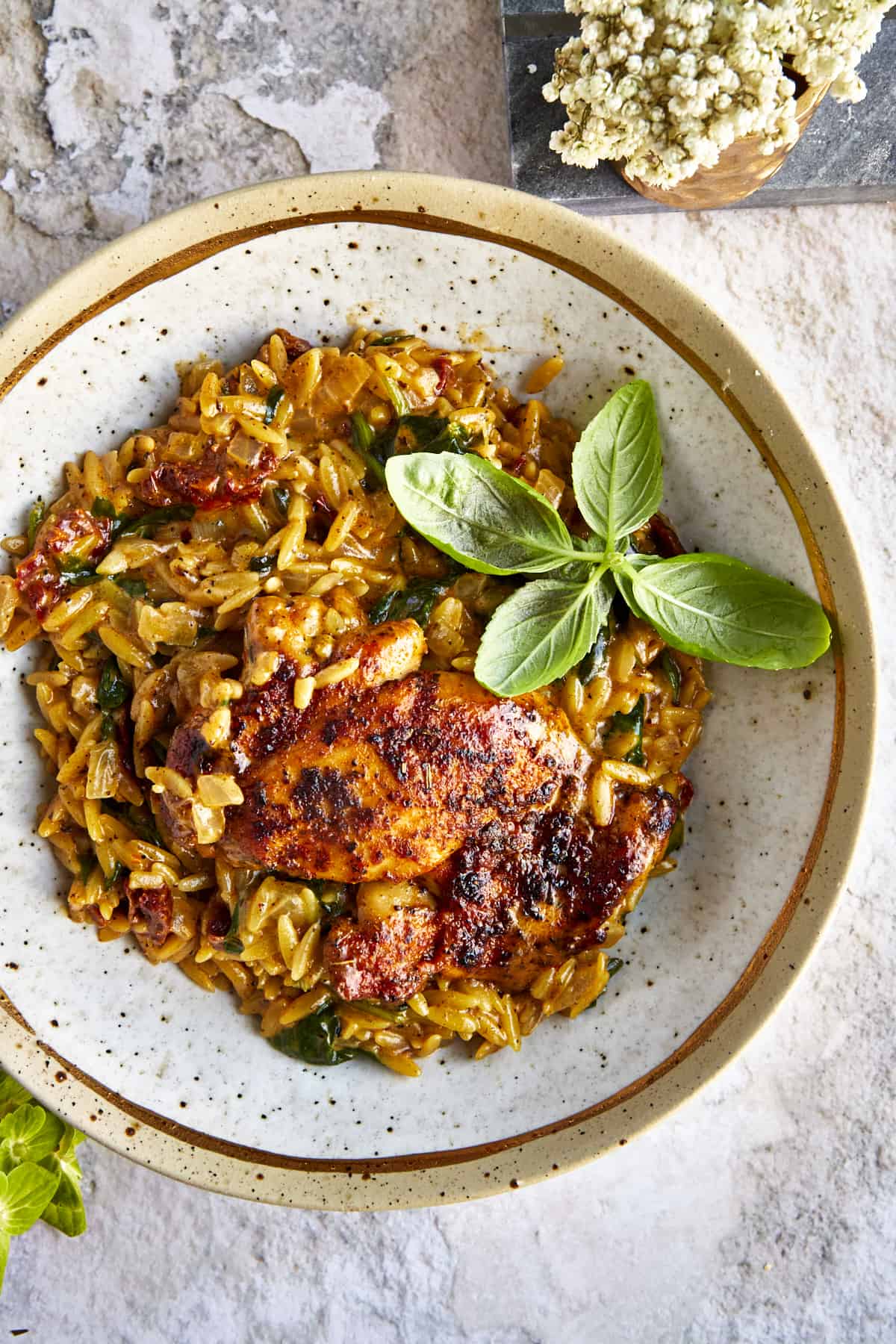
One Pot Chicken Orzo
Ingredients
Method
- Season chicken with salt, pepper, and paprika
- Heat oil in large skillet or Dutch oven over medium-high heat
- Add chicken and cook until browned on all sides, 5-6 minutes
- Remove chicken and set aside
- In same pot, add onion and cook until softened, 3-4 minutes
- Add garlic and cook until fragrant, 30 seconds
- Add orzo and toast for 1 minute, stirring constantly
- Return chicken to pot with any accumulated juices
- Add broth, oregano, and thyme
- Bring to boil, then reduce heat to low
- Cover and simmer for 10 minutes, stirring occasionally
- Add cherry tomatoes and spinach
- Cook uncovered 3-4 minutes until spinach wilts and liquid is absorbed
- Stir in Parmesan cheese and parsley
- Season with salt and pepper to taste
- Serve immediately