
Sheet Pan Pineapple Chicken: Your Tropical Weeknight Escape
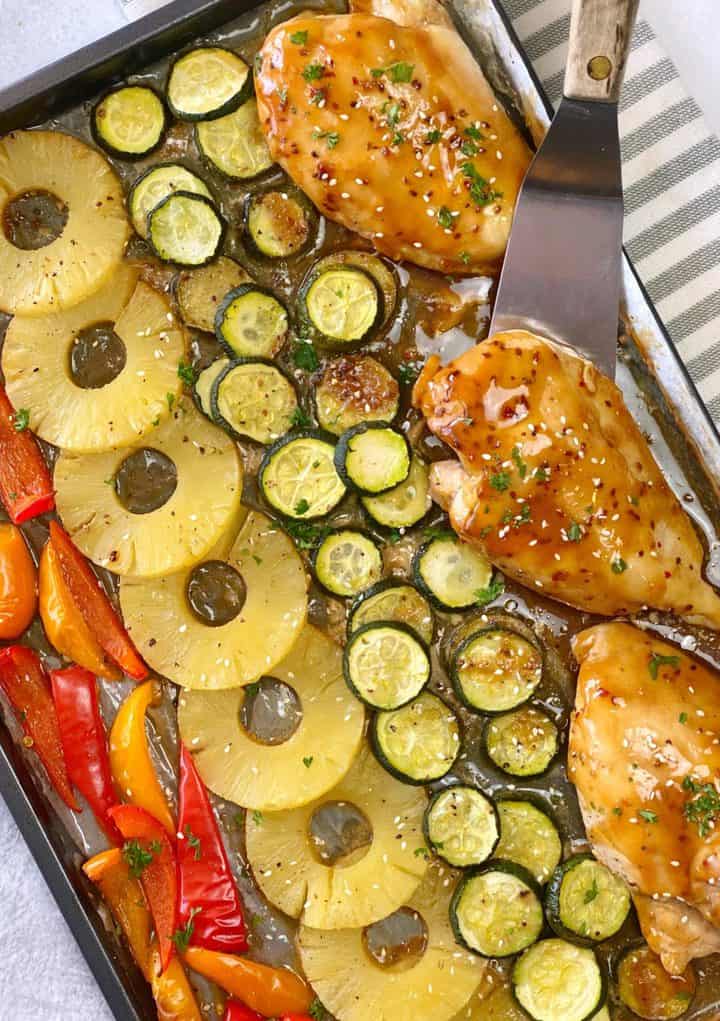
The Sheet Pan Pineapple Chicken is a vibrant, flavorful, and incredibly easy meal that brings the taste of the tropics right to your dinner table. This recipe is the epitome of weeknight convenience: all the ingredients—tender chicken, sweet pineapple, and colorful bell peppers—are tossed in a simple, sticky glaze and roasted together on a single sheet pan. The result is a complete, balanced meal with minimal cleanup and maximum flavor. It’s a healthy, satisfying alternative to takeout that is ready in under 40 minutes.
My inspiration for this recipe came from a love of classic sweet and sour chicken, but with a healthier, more streamlined approach. By using the sheet pan method, we eliminate the need for deep frying and multiple pots, allowing the natural sugars in the pineapple and the glaze to caramelize beautifully around the chicken and vegetables. The key to this recipe is the two-stage glazing process. Brushing the glaze on halfway through the cooking process ensures the chicken is fully cooked before the sugars in the glaze have a chance to burn. This simple technique results in a perfectly cooked, sticky, and flavorful dish every time. This sheet pan meal is the culmination of that effort—a simple, elegant, and deeply satisfying meal that is perfect for a quick dinner or a healthy meal prep option.

What sets this recipe apart is the incredible balance of sweet, savory, and tangy flavors. The natural sweetness of the pineapple and the honey in the glaze is perfectly balanced by the savory soy sauce and the tang of the rice vinegar. The fresh ginger and garlic provide a necessary aromatic depth that elevates the flavor beyond a simple sweet and sour. It’s a complete, balanced meal that is easy to customize and guaranteed to be a family favorite, especially for those who love Asian-inspired flavors.
Why This Recipe Works: The Science of High-Heat Caramelization
The success of the Sheet Pan Pineapple Chicken is rooted in the efficiency and flavor-building power of the sheet pan roasting method. The science is in maximizing the Maillard reaction and caramelization while ensuring the chicken remains tender and juicy.
By roasting the chicken and vegetables at a high temperature (400°F/200°C), we promote the Maillard reaction on the chicken and the caramelization of the natural sugars in the pineapple and the glaze. This process creates the deep, savory, and sticky crust that is characteristic of this dish. The key to preventing the glaze from burning is the two-stage glazing process. Sugars burn easily at high temperatures. By only adding the glaze halfway through the cooking process, we allow the chicken to cook through before the sugars have a chance to scorch. The cornstarch in the glaze is also crucial, as it thickens the sauce as it bakes, creating a perfect, glossy, and sticky coating.
Key Ingredients for Success
This recipe relies on simple, fresh ingredients, but a few key components are essential for achieving the authentic sweet and sour flavor profile:
-
Fresh Pineapple Chunks: Use fresh pineapple for the best flavor and texture. Canned pineapple can be used in a pinch, but ensure it is well-drained. The natural acidity of the pineapple helps to tenderize the chicken and its sweetness is essential for the glaze.
-
Boneless, Skinless Chicken Breasts: Cut the chicken into uniform 1-inch cubes. Uniformity is essential for even cooking, ensuring the chicken is tender and juicy when the vegetables are done. You can substitute with boneless, skinless chicken thighs for a richer flavor.
-
Low-Sodium Soy Sauce: Use low-sodium soy sauce to control the saltiness of the dish. The soy sauce provides the necessary savory, umami base that balances the sweetness of the pineapple and honey.
-
Honey or Maple Syrup: This is the primary sweetener in the glaze. Honey provides a classic, floral sweetness, while maple syrup is a great vegan alternative that provides a deeper, more complex sweetness.
-
Fresh Ginger and Garlic: These aromatics are essential for the Asian-inspired flavor profile. Use fresh, minced ginger and garlic for the best flavor. Do not substitute with dried or powdered versions.
Pro Tips for the Perfect Sheet Pan Chicken
To ensure your sheet pan meal is perfectly cooked—tender chicken, caramelized vegetables, and a sticky glaze—keep these expert tips in mind:
First and foremost, don’t overcrowd the pan. This is the most common mistake in sheet pan cooking. If the chicken and vegetables are piled too high, they will steam instead of roast, resulting in a pale, soggy dish. Use a large enough baking sheet to ensure the ingredients are spread in a single, even layer. If necessary, use two smaller sheet pans.
Secondly, line the pan with parchment paper. This is the secret to minimal cleanup. The parchment paper prevents the caramelized sugars and seasonings from sticking to the pan, allowing you to simply toss the paper away after the meal. This is a small step that saves significant scrubbing time.
Thirdly, use the two-stage glazing process. Only brush on half of the glaze halfway through the cooking process. This allows the chicken to cook through before the sugars in the glaze have a chance to burn. The second half of the glaze is tossed with the cooked chicken and vegetables at the end, ensuring a fresh, vibrant flavor and a sticky coating.
Finally, check the chicken’s internal temperature. The chicken is done when its internal temperature reaches 165°F (74°C). Relying solely on visual cues can lead to dry chicken. Use a quick-read thermometer to ensure your chicken is perfectly cooked—tender, juicy, and safe to eat.
Step-by-Step: Bringing It to Life
The process begins with the prep. Preheat your oven to 400°F (200°C) and line a large baking sheet with parchment paper. In a large bowl, toss the cubed chicken, bell peppers, red onion, and pineapple chunks with olive oil, salt, and pepper. Spread the mixture in a single layer on the prepared baking sheet.
Next, we prepare the glaze. In a small bowl, whisk together the soy sauce, honey, rice vinegar, ginger, garlic, and cornstarch until the cornstarch is dissolved. This is your sticky, flavorful glaze.
Bake the chicken and vegetables for 15 minutes. Remove the pan from the oven and brush half of the glaze evenly over the chicken and vegetables. Return to the oven and bake for an additional 10 minutes, or until the chicken is cooked through and the glaze is bubbly and slightly thickened.
The final step is the finish. Remove the pan from the oven and toss the remaining glaze with the cooked chicken and vegetables. This ensures a fresh, vibrant flavor and a sticky coating. Serve immediately over cooked rice or quinoa, garnished with fresh cilantro.
Variations and Creative Twists
This Sheet Pan Pineapple Chicken is a versatile recipe that can be easily adapted to include other vegetables, proteins, or flavor boosters. Here are a few ways to customize your sheet pan meal:
-
Different Vegetables: Add 1 cup of chopped broccoli florets or snap peas to the pan along with the bell peppers. They cook at a similar rate and add extra fiber and nutrients to the meal.
-
Spicy Kick: Add 1/2 teaspoon of red pepper flakes to the glaze for a subtle, warming heat. You can also garnish the finished dish with thinly sliced jalapeños for a fresh, spicy note.
-
Different Protein: Easily substitute the chicken with 1.5 pounds of large shrimp (add them during the last 10 minutes of roasting) or 1.5 pounds of firm tofu (pressed and cubed) for a vegetarian option.
-
Sesame Flavor: Add 1 teaspoon of sesame oil to the glaze for a nutty, aromatic depth of flavor. You can also garnish the finished dish with toasted sesame seeds.
Frequently Asked Questions
This simple, healthy recipe often leads to a few common questions. Here are the answers to help you achieve a perfect sheet pan meal every time.
Q: Can I use canned pineapple?
A: Yes, you can. Ensure the canned pineapple is well-drained before adding it to the pan. The flavor and texture of fresh pineapple are superior, but canned works in a pinch.
Q: How do I prevent the glaze from burning?
A: The key is the two-stage glazing process. Only add the glaze halfway through the cooking process, and ensure the oven temperature is not too high. If the glaze starts to look too dark, you can loosely tent the pan with aluminum foil.
Q: Can I make this ahead of time for meal prep?
A: Absolutely. This recipe is perfect for meal prep. Cook the chicken and vegetables as directed, and store them in separate containers from the rice or quinoa. When ready to eat, simply reheat the chicken and vegetables and assemble the bowl.
Q: Why is my chicken dry?
A: Your chicken is likely dry because it was overcooked. Use a meat thermometer to ensure the internal temperature reaches exactly 165°F (74°C). If the vegetables are not done, remove the chicken and continue roasting the vegetables alone.
Conclusion
Mastering the Sheet Pan Pineapple Chicken is a simple yet powerful way to bring a healthy, flavorful, and deeply satisfying meal to your table with minimal effort. It’s a recipe that relies on the efficiency of the sheet pan method and the perfect balance of sweet, savory, and tangy flavors to deliver a truly memorable dining experience. The tender chicken, the caramelized pineapple, and the sticky glaze create a comforting and exciting meal.
I encourage you to try this recipe for your next busy weeknight. It’s a guaranteed hit that will quickly become a staple. Don’t forget to share your photos and any questions you have in the comments below. I love hearing about your creative twists and how you made this tropical sheet pan meal your own. Happy cooking!
Ingredients
Method
- Preheat your oven to 400°F (200°C). Line a large baking sheet with parchment paper.
- In a large bowl, toss the chicken, bell peppers, red onion, and pineapple chunks with olive oil, salt, and pepper.
- Spread the mixture in a single layer on the prepared baking sheet.
- In a small bowl, whisk together the soy sauce, honey, rice vinegar, ginger, garlic, and cornstarch until the cornstarch is dissolved.
- Bake the chicken and vegetables for 15 minutes.
- Remove the pan from the oven and brush half of the glaze evenly over the chicken and vegetables.
- Return to the oven and bake for an additional 10 minutes, or until the chicken is cooked through (internal temperature of 165°F/74°C) and the glaze is bubbly and slightly thickened.
- Toss the remaining glaze with the cooked chicken and vegetables before serving over rice or quinoa, garnished with cilantro.