
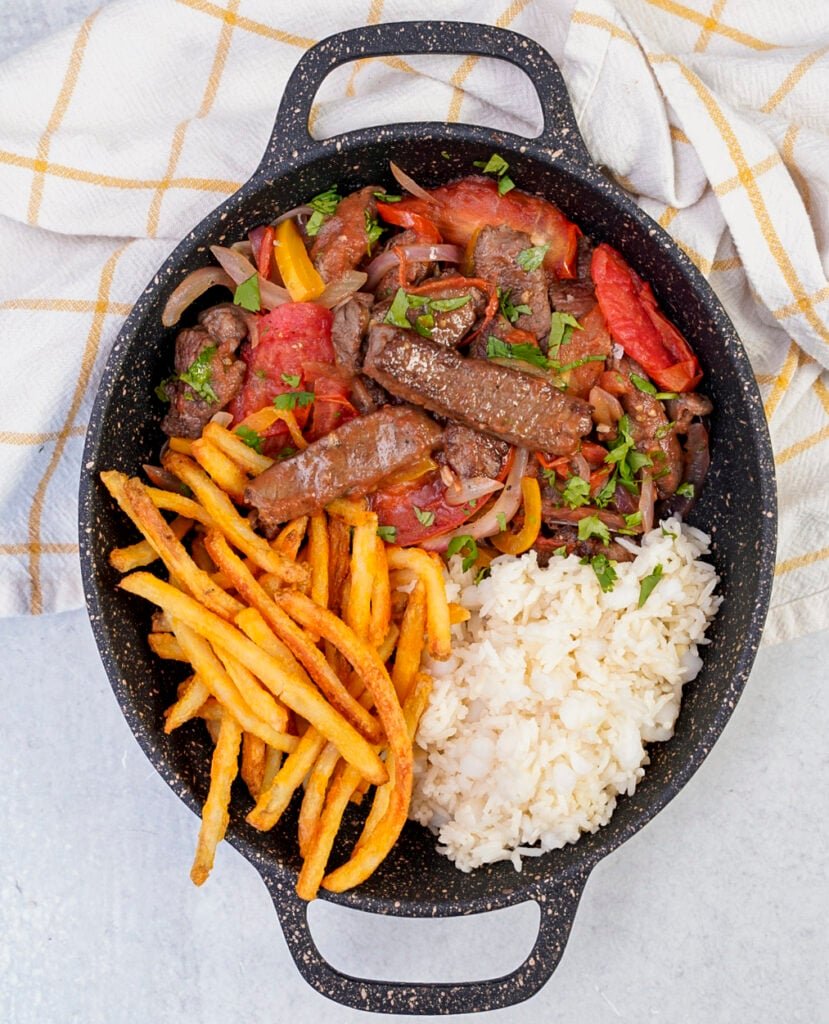
If there is one dish that perfectly encapsulates the melting pot of cultures that is Peruvian cuisine, it is Lomo Saltado. This iconic stir-fry is a beautiful marriage of native Peruvian ingredients—potatoes, tomatoes, and aji amarillo—with Chinese Cantonese techniques and flavors brought by immigrants in the late 19th century.
The result? A mouthwatering, smoky, savory, and tangy dish that features tender strips of beef, crisp onions, juicy tomatoes, and, believe it or not, French fries, all served alongside fluffy white rice. It is “double carb” heaven and arguably Peru’s most popular comfort food.
In this comprehensive guide, we will explore the history of Lomo Saltado, the science behind its unique flavor profile, the best cuts of beef to use, and a foolproof step-by-step recipe to help you achieve authentic restaurant-quality results in your own kitchen. Whether you are a seasoned home cook or new to Peruvian cuisine, this dish is sure to become a favorite.

A Culinary Fusion: The Story of Chifa
To truly appreciate Lomo Saltado, one must understand the roots of Chifa. Chifa is the unique culinary tradition that emerged from the migration of Chinese indentured laborers (coolies) to Peru in the late 1800s and early 1900s. These immigrants, primarily from the Canton (Guangdong) region, brought with them their woks, soy sauce, ginger, and masterful stir-fry techniques.
Lacking some of their traditional ingredients in their new home, they adapted by using what was readily available in Peru. They replaced some native Chinese vegetables with onions and tomatoes, and most importantly, they incorporated the beloved Peruvian potato. Lomo Saltado is the poster child of this fusion. “Lomo” refers to the loin cut of beef, and “Saltado” comes from “salteado,” meaning sautéed or stir-fried (derived from the French word sauter, or “to jump,” describing the action of tossing food in a hot wok).
This dish represents a perfect harmony between the Old World and the New, creating a flavor profile that is distinctively Peruvian yet deeply rooted in Chinese cooking methods. Today, Chifa restaurants are ubiquitous in Lima and throughout Peru, serving as a testament to this enduring cultural exchange.
The Key Ingredients for Authentic Flavor

While the list of ingredients for Lomo Saltado is relatively simple, the quality and preparation of each component are crucial for the final taste. Let’s break down what you need.
1. The Beef (Lomo)
The choice of meat can make or break this dish. Traditionally, as the name implies, beef tenderloin (lomo fino) is used. It is incredibly tender and cooks very quickly, making it ideal for high-heat stir-frying. However, tenderloin can be expensive and sometimes lacks the deep beefy flavor of other cuts.
- Sirloin: This is often the best balance of flavor, tenderness, and price. It holds up well in the wok.
- Skirt Steak or Flank Steak: These cuts are packed with flavor but can be tough if not treated right. If using these, be sure to slice them thinly against the grain to ensure they aren’t chewy.
- Top Loin/Strip Steak: Another solid choice that offers good marbling.
Whichever cut you choose, slice it into strips about 1/2 inch thick and 2 inches long.
2. The Vegetables

- Red Onion: You want thick wedges, not thin slices. The goal is for the onions to retain their crunch and structure, not to turn into mush.
- Plum (Roma) Tomatoes: These are preferred because they have less water and hold their shape better during the high-heat stir-fry. Like the onions, cut them into thick wedges.
- Aji Amarillo: This yellow chili pepper is the DNA of Peruvian cuisine. It adds a fruity, floral heat and a vibrant color. If you can’t find fresh aji amarillo, look for frozen whole peppers or jarred paste in Latin markets. In a pinch, a mix of yellow bell pepper and a pinch of cayenne or jalapeño can substitute, though the flavor won’t be quite the same.
- Scallions: Green onions add a fresh bite and color at the end of cooking.
3. The Sauce
This is where the Chinese influence shines brightest.
- Soy Sauce: Provides the salty, umami base. Use a good quality light soy sauce.
- Vinegar: Usually red wine vinegar or apple cider vinegar. It cuts through the richness of the meat and adds a necessary tang that brightens the dish.
- Oyster Sauce: While not strictly traditional in every household, a dollop adds depth, sweetness, and a glossy sheen to the sauce.
- Beef Broth: A splash helps create enough sauce to soak into the rice and fries.
4. The Starch Duo
It might seem strange to some to serve potatoes and rice together, but in Peru, it is non-negotiable.
- French Fries: Use yellow potatoes if possible (like Yukon Gold) for a creamy interior. They can be tossed into the stir-fry at the very end to soak up the juices (the traditional way) or served on the side to stay crispy.
- White Rice: Serves as the perfect neutral vessel to soak up the savory, tangy sauce.
The Secret Technique: Wok Hei
The distinct flavor of a restaurant-style Lomo Saltado comes from Wok Hei, or “breath of the wok.” This is that smoky, charred flavor achieved by cooking over extremely high heat.
When the oil and fat droplets from the meat hit the superheated wok and catch the flame, they combust, imparting a complex, smoky aroma that simply cannot be replicated by boiling or steaming.
How to replicate Wok Hei at home:
- Use a heavy pan: A carbon steel wok is best because it conducts heat quickly. If you don’t have one, a heavy cast-iron skillet is a great alternative. Avoid non-stick pans as they cannot (and should not) get hot enough.
- Small Batches: Do not crowd the pan! This is the golden rule of stir-frying. If you add all the beef at once, the temperature of the pan drops drastically, and the meat releases its juices and steams instead of searing. Cook the beef in batches to ensure a hard sear and browning.
- High Heat: Get your pan smoking hot before adding oil and meat. You want to hear a loud sizzle the moment the ingredients hit the pan.
Essential Equipment
To make Lomo Saltado, you don’t need a lot of fancy gadgets, but a few key items will help:
- Large Wok or Skillet: As mentioned, carbon steel or cast iron is best.
- Sharp Knife: For precise slicing of beef and vegetables.
- Tongs or Wok Spatula: For tossing ingredients quickly over high heat.
- Rice Cooker: To ensure perfect fluffy white rice every time.
- Deep Fryer or Heavy Pot: For frying the french fries.
Step-by-Step Instructions
Step 1: Prep Your Ingredients (Mise en Place)
Stir-frying happens fast. Once you start cooking, you won’t have time to chop or measure. Have your beef sliced, onions and tomatoes wedged, garlic minced, and sauce mixed before you even turn on the stove. Fry your potatoes beforehand so they are hot and ready to go.
Step 2: Sear the Beef
Season your beef strips generously with salt and pepper. Heat your oil in the wok until smoking. Add the beef in a single layer (remember, do this in batches if necessary). Let it sear undisturbed for a minute to get that brown crust. Flip and cook briefly for another 30 seconds. It’s okay if it’s a little pink in the middle; it will cook more later. Remove the beef and set aside on a plate.
Step 3: Blister the Onions
In the same pan, add a bit more oil if needed. Toss in the onion wedges. You want them to get charred on the edges but stay crisp. This takes about 1-2 minutes. Remove them and set aside with the beef.
Step 4: The Aromatics and Tomatoes
Add the tomatoes and aji amarillo to the hot wok. Cook briefly—tomatoes should not break down into a sauce; they should keep their shape. Add the minced garlic and ginger, cooking for just 30 seconds until fragrant. Be careful not to burn the garlic.
Step 5: The Reunion
Add the beef and onions back to the pan with the tomatoes. Pour in your sauce mixture (soy sauce, vinegar, oyster sauce, broth). Toss everything vigorously. The liquid should bubble and reduce slightly, mingling with the beef juices to form a rich, dark sauce. This should take about 1-2 minutes.
Step 6: Finish and Serve
Turn off the heat. Stir in the chopped fresh cilantro and scallions. If you like the traditional style, toss the fries in now so they absorb the sauce. Otherwise, plate the fries first. Serve the stir-fry immediately alongside a mound of steamed white rice.
Troubleshooting Common Issues
- Soggy Fries: If you prefer crispy fries, serve them on the side or place the stir-fry on top of them at the very last second. Do not toss them in the sauce.
- Tough Meat: This usually happens if the meat is overcooked or sliced with the grain. Ensure you slice against the grain and don’t leave it in the pan too long.
- Watery Sauce: If the tomatoes release too much water or the pan wasn’t hot enough, the sauce can be thin. You can thicken it with a tiny bit of cornstarch slurry if needed, though reduction is better.
- Lack of Smoke: If you miss the smoky flavor, ensure your pan is hotter next time. You can also add a drop of liquid smoke, though purists might frown upon it!
Variations of Lomo Saltado
Lomo Saltado is a versatile dish. Here are a few ways to switch it up:
- Pollo Saltado: Substitute beef with chicken breast or thighs.
- Mariscos Saltado: Use seafood like shrimp, squid, and octopus for a coastal version.
- Saltado de Verduras: A vegetarian version using mushrooms, peppers, and broccoli.
- Tallarin Saltado: Instead of serving with rice and fries, toss the stir-fry with spaghetti noodles for a Peruvian Lo Mein.
Serving Suggestions
Lomo Saltado is a complete meal on its own, but you can enhance the experience:
- Drink Pairing: The traditional drink is Inca Kola, a sweet, yellow, bubblegum-flavored soda that Peruvians love. Alternatively, a glass of Chicha Morada (purple corn drink) or a Pisco Sour cocktail works wonderfully.
- Side Dish: While rice and fries are standard, some people enjoy a side of fried plantains or a simple avocado salad to cut the richness.
Conclusion
Lomo Saltado is more than just a stir-fry; it is a symbol of cultural harmony and culinary innovation in Peru. It is hearty, flavorful, and incredibly satisfying. The combination of juicy beef, crunchy onions, acidic tomatoes, and the double-carb comfort of fries and rice makes it a universal crowd-pleaser.
Whether you are cooking for a weeknight dinner to shake up your routine or hosting a special gathering, this dish is sure to impress. So grab your wok, crank up the heat, and bring a taste of Peru into your kitchen tonight!
Frequently Asked Questions
Can I prepare Lomo Saltado in advance?
It is best eaten fresh right out of the wok. However, you can chop all vegetables and slice the meat hours in advance. Store them in the fridge until you are ready to cook.
Is Lomo Saltado spicy?
It has a mild kick from the aji amarillo, but it is not overwhelmingly spicy. You can adjust the heat by removing the veins and seeds from the pepper or omitting it entirely for a kid-friendly version.
Can I use frozen french fries?
Yes, for a quick weeknight meal, frozen thick-cut fries work perfectly fine. Just bake or fry them according to the package instructions before adding them to the dish.
What if I don’t have a wok?
A large, wide sauté pan or a Dutch oven can work, but a wok is ideal for tossing ingredients. The key is surface area and heat retention.
Is this dish gluten-free?
To make it gluten-free, use Tamari instead of regular soy sauce and ensure your oyster sauce and fries are gluten-free.
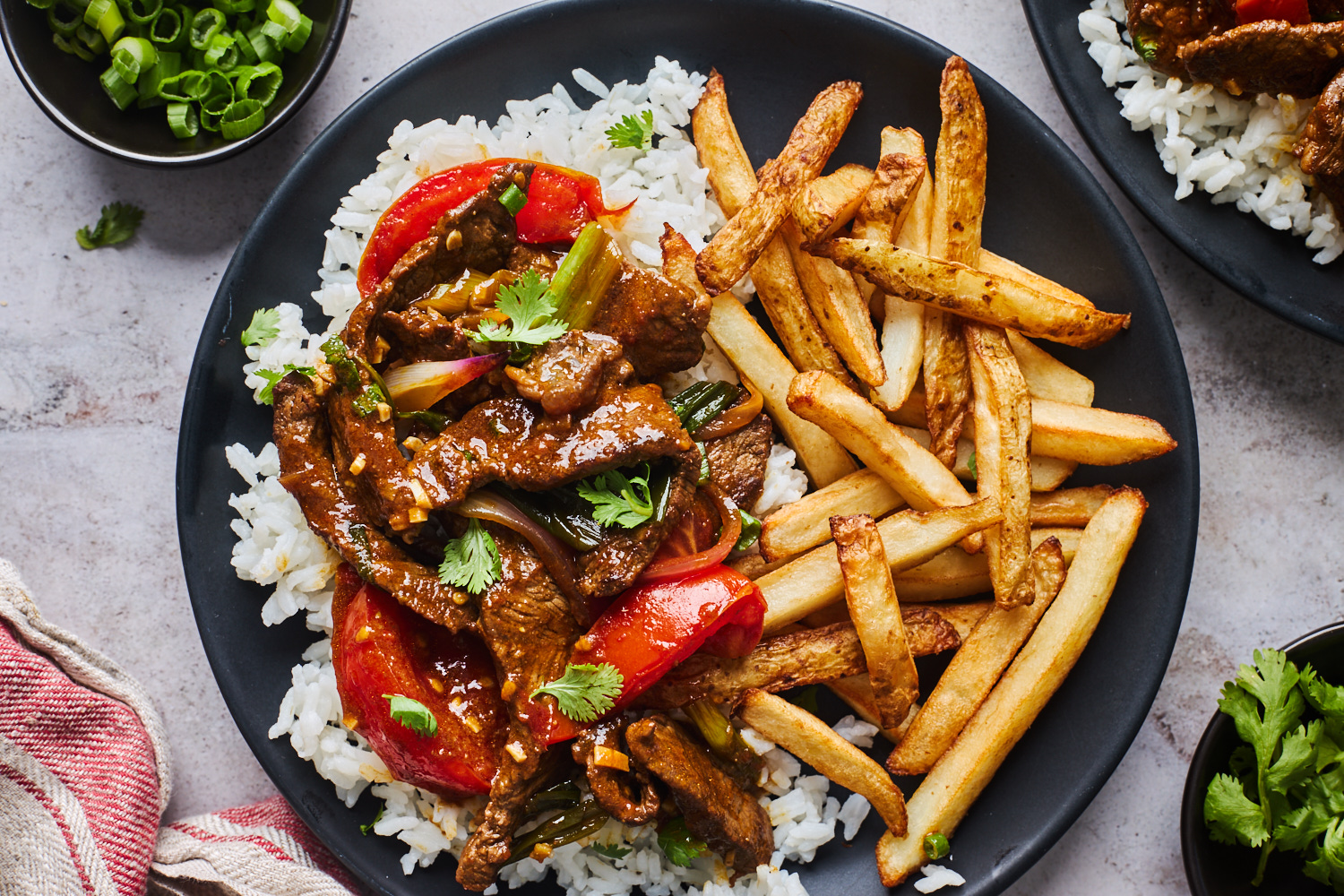
Lomo Saltado Peruvian Stir Fried Beef
Ingredients
Method
- Slice the beef against the grain into 1/2-inch thick strips. Season generously with salt and pepper.
- Prepare all vegetables: slice onions and tomatoes into thick wedges so they hold their shape. Mince garlic and ginger. Slice the aji amarillo.
- Whisk together the soy sauce, vinegar, oyster sauce, and beef broth in a small bowl.
- Heat a wok or large heavy skillet over very high heat. Add 1 tbsp oil and wait until it smokes.
- Add half the beef in a single layer. Sear without moving for 1 minute to get a nice crust. Flip and cook for another minute until browned but not fully cooked through. Remove and set aside. Repeat with remaining beef.
- In the same wok, add another tbsp of oil. Add the red onions and stir-fry for 1-2 minutes until they get some char but are still crunchy. Remove and set aside.
- Add the remaining oil. Add the tomatoes and aji amarillo. Stir-fry for 1 minute—do not overcook the tomatoes. Add the garlic and ginger, stir for 30 seconds until fragrant.
- Add the beef and onions back into the wok. Pour in the sauce mixture.
- Toss everything together for 1-2 minutes until the sauce slightly thickens and coats everything.
- Turn off the heat and toss in the chopped cilantro and the prepared French fries (traditional) or serve the fries on the side.
- Serve immediately with a side of steamed white rice. The combination of the juice soaking into the rice and fries is what makes this dish legendary.