The Bowl That Turned Me Into a Korean Food Obsessive
Imagine a bowl of fluffy white rice topped with tender, caramelized pork that is simultaneously sweet, spicy, savory, and deeply satisfying. That is what a Korean spicy pork bowl delivers, and once you taste it, you will understand why it has become one of the most beloved dishes in Korean home cooking. The combination of gochujang — Korea’s iconic fermented red chili paste — with soy sauce, sesame oil, and a touch of sweetness creates a marinade that transforms simple pork into something extraordinary.
I first encountered this dish at a tiny Korean restaurant where the owner would bring out steaming bowls of what she called “daeji bulgogi” — Korean spicy pork. The pork was so tender it practically melted, the sauce was complex and deeply flavored, and the whole thing over rice was one of the most satisfying meals I had ever eaten. I spent months trying to recreate it at home, and this recipe is the result of that delicious obsession.
Recommended
Castor Wheels
Perfect for your home office setup. High-quality Desktronic gear.
What makes this version truly special is the addition of grated Asian pear to the marinade. It might sound unusual, but the natural enzymes in the pear break down the muscle fibers in the pork, making it incredibly tender without any special techniques or equipment. It is a traditional Korean trick that makes a huge difference in the final texture of the meat.
Why This Recipe Works
The secret to this recipe is the balance of flavors in the marinade. Gochujang provides heat and a deep, fermented complexity that you simply cannot replicate with any other ingredient. Soy sauce adds saltiness and umami. Brown sugar and the natural sweetness of the pear balance the heat. Rice vinegar adds brightness and helps tenderize the meat. Sesame oil adds a nutty, aromatic depth that ties everything together.
Cooking the pork over very high heat is equally important. You want the pan screaming hot so the pork sears quickly and develops caramelized, slightly charred edges. Those caramelized bits are where the most intense flavor lives. If the heat is too low, the pork will steam in its own juices instead of searing, and you will miss out on that incredible sticky, caramelized coating.
The rice is not just a base — it is an essential component of the dish. The mild, slightly sticky white rice balances the bold, spicy pork and provides a neutral canvas that lets the flavors of the marinade shine. Do not skip the garnishes either — the fresh green onions, sesame seeds, and cool cucumber slices add texture and freshness that complete the bowl.
Key Ingredients for Success
Gochujang: This is the soul of the dish and there is no substitute. Gochujang is a fermented Korean chili paste made from red chili peppers, glutinous rice, fermented soybeans, and salt. It has a complex, slightly sweet, deeply savory heat that is completely different from regular hot sauce. Find it at any Asian grocery store or order it online — it keeps for months in the fridge once opened.
Pork Shoulder or Pork Belly: Both cuts work beautifully here. Pork shoulder has more lean meat and a slightly firmer texture, while pork belly is richer and more indulgent with its layers of fat. Either way, slice the meat as thinly as possible — about 1/8 inch thick. Partially freezing the pork for 20 minutes makes thin slicing much easier.
Asian Pear: This is the secret tenderizer. Grate about half a small Asian pear directly into the marinade. If you cannot find Asian pear, a regular apple works as a substitute. The natural enzymes in the fruit break down the proteins in the pork, resulting in incredibly tender meat even after a short marinating time.
Sesame Oil: Use toasted sesame oil, not regular sesame oil. Toasted sesame oil has a rich, nutty, aromatic flavor that is essential to Korean cooking. A little goes a long way — just one tablespoon adds enormous depth to the marinade.
Fresh Garlic and Ginger: Please use fresh, not powdered. Fresh garlic and ginger have a brightness and pungency that dried versions simply cannot match. Mince the garlic finely and grate the ginger on a microplane for the best flavor distribution in the marinade.
Pro Tips for the Perfect Korean Spicy Pork Bowl
Marinate the pork for as long as possible. While 30 minutes is the minimum, overnight marinating in the refrigerator produces dramatically more flavorful and tender results. The gochujang and pear enzymes need time to work their magic. If you are planning this for a weeknight dinner, marinate the pork the night before and it will be ready to cook in minutes when you get home.
Cook the pork in batches and do not overcrowd the pan. This is the most common mistake people make with this recipe. When you add too much meat to the pan at once, the temperature drops and the pork steams instead of searing. You want each piece of pork to have direct contact with the hot pan surface. Cook in two or three batches if necessary, and the results will be far superior.
Let the pork cook undisturbed for the first 2-3 minutes before stirring. This is how you get those beautiful caramelized edges. Resist the urge to constantly stir and move the meat around. Patience in this step is what separates a good Korean pork bowl from a great one.
Serve immediately while the pork is hot and sizzling. The contrast between the hot, caramelized pork and the cool cucumber slices is part of what makes this dish so satisfying. If you need to hold the pork for a few minutes, keep it in the pan over very low heat.
Step-by-Step: Bringing It to Life
The process begins the night before — or at least 30 minutes before you plan to cook. Slice the pork as thinly as you possibly can. I find that putting the pork in the freezer for about 20 minutes firms it up just enough to make thin slicing much easier. Aim for slices about as thin as a coin. Thinner slices mean more surface area for the marinade to penetrate and more opportunity for caramelization when cooking.
Make the marinade by whisking together the gochujang, soy sauce, sesame oil, brown sugar, rice vinegar, minced garlic, grated ginger, and grated pear in a large bowl. The marinade should be thick, glossy, and deeply red-orange in color. Taste it — it should be spicy, sweet, savory, and slightly tangy all at once. Add the sliced pork and toss to coat every piece thoroughly. Cover and refrigerate.
When you are ready to cook, start your rice first so it is ready when the pork is done. Heat a large skillet or wok over the highest heat your stove can produce. Add a thin film of neutral oil — just enough to coat the pan. When the oil shimmers and just begins to smoke, add the first batch of pork in a single layer. Do not touch it for 2-3 minutes. You should hear aggressive sizzling and see the edges caramelizing. Flip and cook for another 2 minutes. The pork should be cooked through with beautifully caramelized, slightly charred edges.
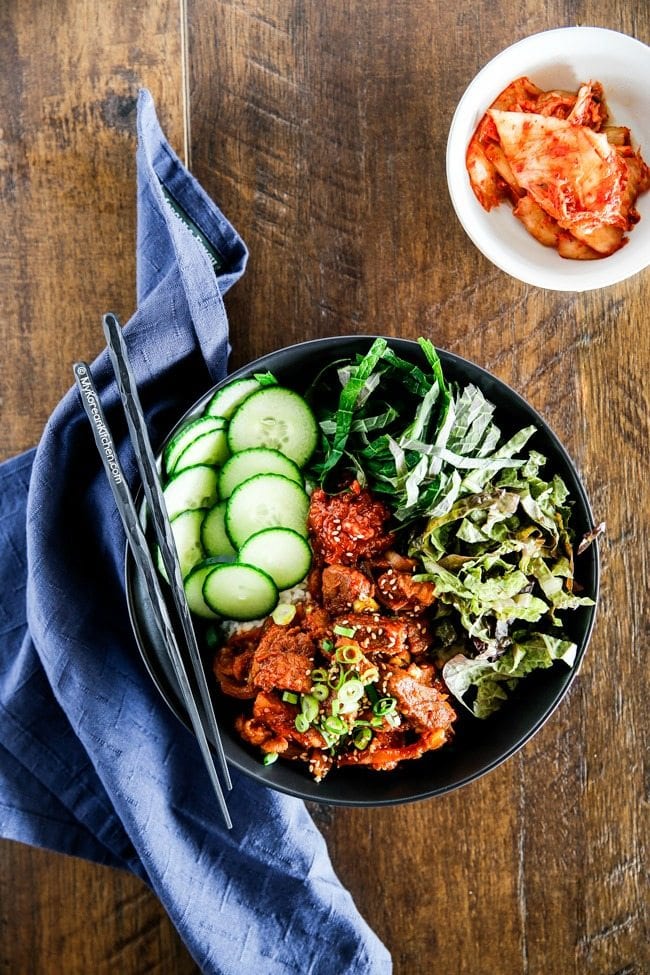
Assemble the bowls by placing a generous scoop of rice in each bowl, then topping with the hot, sizzling pork. Scatter sliced green onions and sesame seeds over the top. Add cucumber slices on the side for freshness and cooling contrast. If you have kimchi, add a small pile alongside — the fermented, tangy kimchi is the perfect accompaniment to the rich, spicy pork.
Variations and Creative Twists
For a chicken version, use thinly sliced boneless chicken thighs instead of pork. Chicken thighs have enough fat to stay juicy and flavorful with the gochujang marinade. The cooking time will be slightly shorter — about 3-4 minutes total — since chicken thighs are thinner than pork shoulder. This is a great option if you prefer a leaner protein.
For a low-carb version, serve the spicy pork over cauliflower rice or in lettuce wraps instead of white rice. The bold flavors of the pork stand up beautifully to the neutral cauliflower rice, and the lettuce wraps add a fun, interactive element to the meal. Add shredded carrots, sliced radishes, and a drizzle of sriracha mayo for extra flavor and crunch.
For a bibimbap-style bowl, add a fried egg on top of the pork and rice, along with a variety of seasoned vegetables — sautéed spinach, blanched bean sprouts, and shredded carrots. Drizzle everything with extra gochujang sauce and mix it all together before eating. This turns the simple pork bowl into a full Korean bibimbap experience.
Frequently Asked Questions
Q: How spicy is this dish? A: The heat level depends on the brand of gochujang you use and how much you add. Most gochujang is moderately spicy — noticeable but not overwhelming. For a milder version, reduce the gochujang to 2 tablespoons and add an extra tablespoon of soy sauce. For more heat, add a teaspoon of gochugaru (Korean red pepper flakes) to the marinade.
Q: Where can I find gochujang? A: Gochujang is available at most Asian grocery stores, Whole Foods, and increasingly at regular supermarkets in the international foods aisle. You can also order it online. The CJ Haechandle brand is widely available and consistently good.
Q: Can I use a different cut of pork? A: Pork shoulder and pork belly are the traditional choices, but pork loin also works if sliced very thinly. Avoid thick pork chops — they take too long to cook through and do not absorb the marinade as well as thinner cuts.
Q: Can I freeze the marinated pork? A: Yes! Marinated pork freezes beautifully for up to 3 months. Place the marinated pork in a zip-lock freezer bag, remove as much air as possible, and freeze flat. Thaw overnight in the refrigerator before cooking.
Q: What can I serve alongside this dish? A: Beyond the cucumber and kimchi mentioned in the recipe, this dish pairs beautifully with steamed or sautéed bok choy, pickled daikon radish, miso soup, or a simple Korean spinach salad seasoned with sesame oil and garlic.
A Bowl Worth Making Again and Again
These simple Korean spicy pork bowls have earned a permanent spot in my weeknight dinner rotation, and I am confident they will do the same for you. The recipe is straightforward, the ingredients are accessible, and the results are absolutely restaurant-quality. Once you discover the magic of gochujang, you will find yourself adding it to everything.
Try this recipe and let me know what you think in the comments below. I would love to hear about your experience with Korean cooking and any variations you have tried. And if you are new to Korean cuisine, welcome — this is a wonderful place to start your delicious journey.
Slice the pork as thinly as possible — partially freezing it for 20 minutes makes this much easier. Thin slices cook quickly and absorb the marinade better.
In a large bowl, whisk together gochujang, soy sauce, sesame oil, brown sugar, rice vinegar, minced garlic, grated ginger, and grated pear. The pear contains natural enzymes that tenderize the meat.
Add the sliced pork to the marinade and toss to coat every piece. Let it marinate for at least 30 minutes, or up to overnight in the refrigerator for deeper flavor.
Cooking
Heat a large skillet or wok over high heat until very hot. Add a thin layer of neutral oil.
Add the marinated pork in a single layer — do not overcrowd the pan. Cook in batches if necessary. Cook for 2-3 minutes without stirring to get some caramelization.
Stir and continue cooking for another 2-3 minutes until the pork is cooked through and the edges are slightly caramelized and sticky.
Assembly
Divide the cooked rice among four bowls.
Top each bowl with a generous portion of the spicy pork.
Garnish with sliced green onions, sesame seeds, and cucumber slices. Serve with kimchi on the side if desired.