
Introduction
I have always been a huge fan of bagels—their chewy crust, the dense and soft crumb inside, and, of course, the way they hold up beautifully to all kinds of toppings. But after years of trying different recipes and variations, I stumbled upon a version that changed my bagel game entirely: homemade cottage cheese bagels. They are rich, tangy, and offer a wonderful moistness that you don’t often get with traditional bagels. It’s like the perfect harmony between a classic bagel and a fresh, savory cheese twist.
Making bagels from scratch might feel intimidating if you haven’t tried it before, but I promise it’s much easier than it seems, especially when cottage cheese is involved. The cheese adds softness and moisture to the dough, giving the bagels a unique texture and flavor that’s simply irresistible. I found that baking these at home fills my kitchen with this amazing warm, comforting aroma that instantly makes me hopeful for breakfast or brunch to come.

Today, I’m so excited to share this recipe with you. Whether you’re a seasoned baker or a curious beginner ready to try something new, these cottage cheese bagels will elevate your homemade bread journey. Grab your ingredients, and let’s bring those golden, chewy gems to life!
Why This Recipe Works
What makes these bagels stand out is how cottage cheese transforms the dough. Instead of relying solely on flour and yeast, this recipe incorporates cottage cheese to boost moisture levels and introduce a subtle tangy flavor that cuts through the dough’s density. This tweak makes the bagels delightfully soft on the inside without sacrificing that classic chewiness on the outside.
Another reason this recipe shines is the straightforward method. We skip overly complicated processes while still honoring traditional bagel-making techniques like boiling before baking. This ensures the chewy crust forms beautifully, creating that iconic bagel bite. Plus, the ingredients are everyday staples, so you don’t need specialized items to make this delicious version.

Key Ingredients for Success
Now, let’s talk about the essential ingredients that bring these bagels to life and how each one contributes to the final product. First up, the cottage cheese. Using full-fat cottage cheese works best here because it adds the right amount of richness and moisture. Avoid low-fat or drained types, as they can make the dough too dry or crumbly.
Next, bread flour is my go-to for that glorious chewy texture. Its higher protein content compared to all-purpose flour helps develop more gluten, giving the bagels structure and elasticity. Don’t substitute it lightly, or you’ll lose that signature bite.
Yeast, of course, is mandatory. I prefer active dry yeast for this recipe because it’s easy to work with and gives plenty of rise. Just make sure it’s fresh! Another key is sugar—it feeds the yeast and adds a gentle sweetness to balance the tang of the cottage cheese.
Salt is critical, too, to enhance all those flavors and control the yeast fermentation. Lastly, the boiling step uses water with a hint of baking soda. This alkaline bath helps create the chewy, glossy crust we love in bagels. Each ingredient plays a starring role in turning humble basics into a bakery-worthy treat.
Pro Tips for the Perfect Homemade Cottage Cheese Bagels
Getting homemade bagels just right can take a little patience and practice, but these tips have made all the difference for me. First, never rush the dough’s rise. Let your bagel dough ferment until it’s doubled in size; this develops flavor and texture. When you press your fingertip into the dough and it slowly springs back, you know it’s ready.
Second, when shaping your bagels, avoid making the holes too big or too small. If the hole is too small, it closes up during baking, and if too large, the bagels might bake unevenly. A good rule of thumb is to aim for about 2 inches diameter for the hole.
During the boiling step, don’t overcrowd the pot, and boil the bagels a few at a time for about a minute per side. This ensures they firm up perfectly. Remember, the water should have a touch of baking soda—it’s this little addition that boosts the crust’s texture and color.
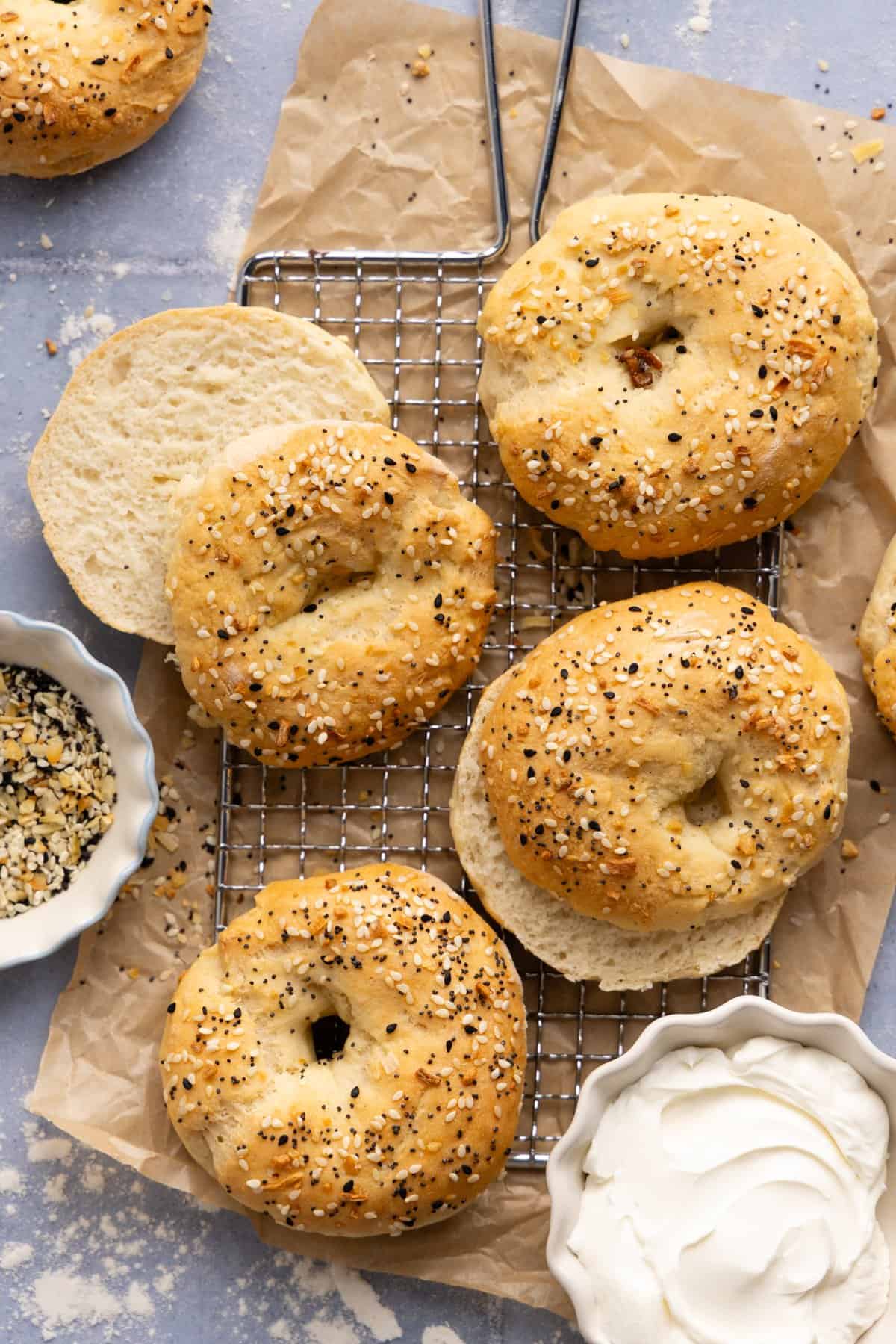
Lastly, if you want a little extra flair, sprinkle your bagels with toppings like everything bagel seasoning, sesame seeds, or poppy seeds right after boiling and before baking. The residual moisture lets the toppings stick perfectly and adds delicious flavor and crunch.
Step-by-Step: Bringing It to Life
Begin by mixing your warm water and sugar in a large bowl, then sprinkle in the active dry yeast and allow it to bloom for about 5 to 10 minutes. You’ll see it turn foamy—that’s your sign the yeast is alive and ready.
Next, combine the cottage cheese, bread flour, and salt in another bowl. Gradually pour in the yeast mixture and stir until a shaggy dough forms. Then turn it out onto a clean surface and knead vigorously for 8 to 10 minutes. When the dough feels elastic and smooth, shape it into a ball and place it in a greased bowl. Cover with a clean towel and let it rest in a warm spot for about 1 to 1.5 hours until it doubles in size.
Once risen, punch down the dough, then divide it into equal portions—usually 8 to 10, depending on preferred bagel size. Roll each piece into a ball, poke a hole through the center with your thumb, and gently stretch the hole to about 2 inches in diameter.
Bring a large pot of water to boil, adding a tablespoon of baking soda to it. Lower bagels into the water, boiling 2-3 at a time for about 1 minute per side. Remove with a slotted spoon and place them on a parchment-lined baking sheet. If desired, sprinkle toppings while they’re still wet.
Finally, bake the bagels in a preheated oven at 425°F (220°C) for about 20 to 25 minutes. You’ll notice the crust turn golden and the aroma fill your kitchen—a warm, inviting scent that hints at the tasty journey to come. Let them cool slightly before slicing or enjoying them fresh.
Variations and Creative Twists
One of the best parts about making these bagels at home is how you can customize them to your heart’s content. If you’re feeling adventurous, try folding fresh herbs like rosemary or thyme into the dough before the first rise for a fragrant, savory hint. Or, if you prefer a sweeter twist, sprinkle cinnamon and sugar on top after the boiling stage.
Cheese lovers can add shredded sharp cheddar or asiago on top prior to baking for an ultra-golden crust loaded with melty goodness. For a fun contrast in texture, consider mixing in some toasted sesame or poppy seeds right after boiling. They create a crunchy, nutty coating that pairs wonderfully with the mild tang of cottage cheese.
If gluten sensitivity is a concern, experimenting with a blend of bread flour and whole wheat flour can add a hearty flavor while keeping chewiness intact. And for an indulgent breakfast, split the bagels, toast them, and pile on smoked salmon, cream cheese, and capers for a classic New York-style experience.
Frequently Asked Questions
Can I use low-fat or non-fat cottage cheese? I highly recommend using full-fat cottage cheese because it provides moisture and richness. Low-fat or non-fat versions tend to dry out the dough, leading to denser bagels.
What type of flour should I use? Bread flour is ideal because of its high protein content, which builds gluten and gives bagels their chewy texture. All-purpose flour can be substituted but expect a softer, less chewy bagel.
Why do bagels need to be boiled before baking? Boiling sets the crust before baking, which creates that classic dense chew and shiny surface. The baking soda in the water also helps develop color and texture.
Can I make the dough ahead of time? Yes! You can prepare the dough, shape the bagels, and then refrigerate overnight. Just boil and bake them the next day for fresh results.
How should I store leftover bagels? Bagels are best enjoyed fresh but can be stored in an airtight container at room temperature for up to 2 days. For longer storage, slice and freeze them, then toast directly from frozen when ready to eat.
Can I add toppings other than seeds? Absolutely! Everything bagel seasoning, kosher salt, dried onion flakes, or even grated cheese are fantastic choices to customize your bagels.
Conclusion
Making homemade cottage cheese bagels has been such a joyful and rewarding experience for me. The unique twist that cottage cheese brings transforms the texture and flavor of classic bagels, offering something both familiar and refreshingly new. I love how the baking process fills my kitchen with cozy aromas, and the result delivers warm, satisfying bites each time.
Whether you’re looking to impress breakfast guests or just want a wholesome treat to enjoy at home, this recipe is a guaranteed winner. Give it a try, and I bet these bagels will become a staple in your baking repertoire as they have in mine!
Homemade Cottage Cheese Bagels
Ingredients
Method
- In a large bowl, combine warm water and sugar; sprinkle the yeast on top and let it bloom for 5-10 minutes until foamy.
- In another bowl, mix together the cottage cheese, bread flour, and salt.
- Add the yeast mixture to the flour mixture and stir until a shaggy dough forms.
- Turn the dough onto a lightly floured surface and knead for 8-10 minutes until smooth and elastic.
- Place the dough in a greased bowl, cover with a towel, and let it rise in a warm place for 1 to 1.5 hours or until doubled in size.
- Punch down the risen dough and divide it into 8 equal portions.
- Shape each portion into a ball, then poke a hole through the center with your thumb and gently stretch it to about 2 inches in diameter.
- Bring 10 cups of water to a boil in a large pot and add the baking soda.
- Boil the bagels in batches, about 2-3 at a time, for 1 minute per side.
- Remove the boiled bagels with a slotted spoon and place them on a parchment-lined baking sheet.
- Preheat your oven to 425°F (220°C).
- If desired, sprinkle your chosen toppings over the bagels while they’re still wet from boiling.
- Bake the bagels for 20-25 minutes until golden brown and crusty.
- Remove from the oven and let cool on a wire rack for at least 10 minutes before slicing and serving.