
Introduction: The Ethereal Cloud of Japanese Cheesecake
Imagine a dessert so light, so airy, and so incredibly soft that it feels like you’re biting into a sweet, creamy cloud. This is the legendary Japanese Cheesecake, also known as “Cotton Cheesecake” or “Soufflé Cheesecake.” Unlike its dense and heavy New York-style cousin, this Japanese masterpiece is a delicate balance of rich cream cheese flavor and a texture that is almost impossibly fluffy. It’s the kind of dessert that jiggles with a gentle touch and melts on your tongue, leaving behind a subtle, lingering sweetness. It is, quite simply, the dreamiest dessert you will ever make, and once you’ve mastered it, your baking repertoire will never be the same.
The magic of Japanese Cheesecake lies in its unique preparation method, which combines the richness of a custard with the structural elegance of a soufflé. It’s a dish that requires patience, precision, and a little bit of love, but the reward is a show-stopping centerpiece that is as beautiful to look at as it is to eat. I remember the first time I saw a video of these cakes jiggling in a bakery in Osaka; I was mesmerized by their perfect, golden domes and the way they seemed to defy gravity. Recreating that experience at home was a journey of trial and error, but today, I am sharing the definitive guide to achieving that perfect, crack-free, cotton-soft result every single time.

Why This Recipe Works: The Art of the Bain-Marie

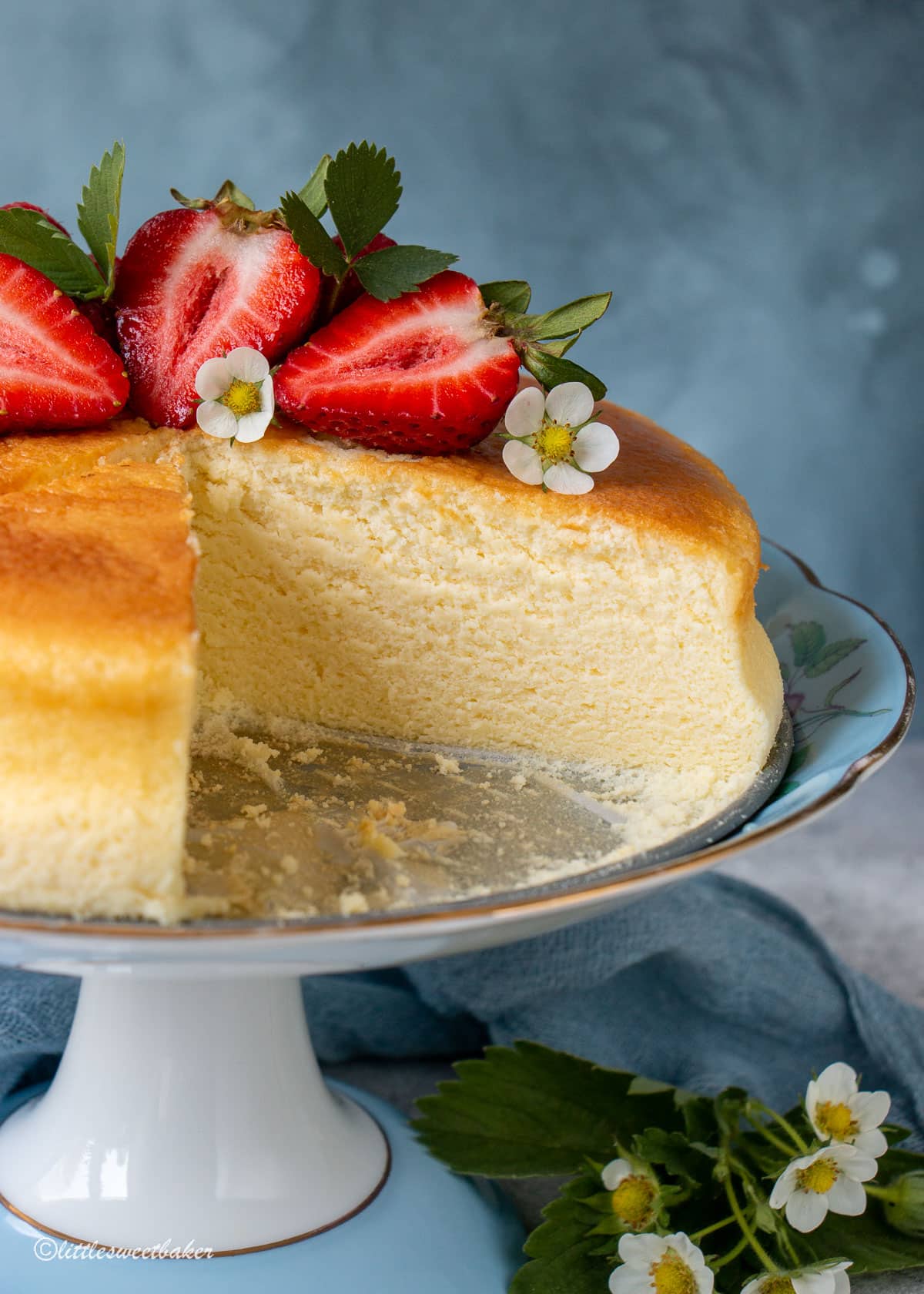
What sets this recipe apart is the focus on temperature control and aeration. By melting the cream cheese, butter, and milk in a double boiler, we create a perfectly smooth, emulsified base that incorporates easily with the other ingredients. The real secret, however, is the Bain-Marie (water bath). Baking the cake in a tray of hot water ensures a gentle, even heat that prevents the eggs from curdling and the surface from cracking. Furthermore, by whisking the egg whites to soft peaks rather than stiff peaks, we allow the cake to expand gracefully in the oven without the internal pressure that causes unsightly splits. This careful management of moisture and air is what produces that signature “jiggle.”
Key Ingredients for Success
Full-Fat Cream Cheese: This is the foundation of the cake’s flavor and creaminess. Ensure it is at room temperature for a lump-free batter. Cake Flour: The low protein content in cake flour is essential for a tender, delicate crumb. Cornstarch: This adds stability to the structure while maintaining the “melt-in-your-mouth” quality. Cold Egg Whites: While the yolks should be at room temperature, cold egg whites actually create a more stable, fine-pored meringue, which is crucial for the cake’s airy texture. Cream of Tartar: This acidic ingredient stabilizes the egg white proteins, ensuring your meringue doesn’t collapse during the folding process. Lemon Juice: A touch of acidity brightens the flavor and helps cut through the richness of the cheese and butter.

Pro Tips for the Perfect Japanese Cheesecake
First and foremost, do not overbeat your egg whites. You are looking for “soft peaks”—where the tip of the meringue curls over like a wave when you lift the whisk. If you beat them to stiff peaks, the cake will rise too quickly and then collapse or crack. Secondly, line your pan meticulously. The parchment paper should be tall enough to support the cake as it rises above the rim of the pan. Lastly, the cooling process is just as important as the baking. Never take the cake out of the oven immediately. Letting it cool gradually with the oven door ajar allows the structure to set slowly, preventing the dreaded “deflated” look.

Step-by-Step: Bringing It to Life
The journey begins with the gentle melting of the cheese, butter, and milk. Watching these ingredients transform into a silky, pale yellow liquid is a calming start to the process. As you sift in the flour and cornstarch, you’ll notice the batter becoming thick and luxurious. The most exciting part is creating the meringue; watching clear egg whites turn into a voluminous, snowy-white foam is pure kitchen magic. Folding the two mixtures together requires a gentle hand—you want to preserve as much air as possible while ensuring a uniform, streak-free batter.
As the cake bakes in its warm water bath, the aroma of sweet cream and vanilla will fill your home. Watching it rise through the oven window is a test of patience, but seeing that perfect, golden-brown top emerge is incredibly satisfying. The “jiggle test” when you remove it from the oven is the ultimate confirmation of success. While it’s tempting to dive in immediately, the final step of chilling is crucial. As the cake rests in the refrigerator, the flavors deepen and the texture settles into its final, ethereal form. When you finally unmold it and see that tall, proud cake, you’ll know that every minute of effort was worth it.
Variations and Creative Twists
For a Matcha Twist, sift in 1-2 tablespoons of high-quality culinary grade matcha powder along with the flour. This adds a beautiful green hue and a sophisticated, earthy flavor that pairs perfectly with the cream cheese. If you’re a fan of citrus, you can increase the lemon zest or even add a touch of orange zest for a Citrus Burst version. For a more decadent treat, serve each slice with a dollop of lightly sweetened whipped cream and a handful of fresh berries. You can even experiment with a Chocolate Marble effect by swirling a small amount of cocoa powder into a portion of the batter before folding.
Frequently Asked Questions
Q: Why did my cake crack? A: This is usually caused by the oven being too hot or the egg whites being beaten to stiff peaks. Ensure your oven temperature is accurate and stick to soft peaks. Q: Why did my cake shrink or collapse? A: Some shrinkage is normal, but a total collapse usually means the cake was underbaked or cooled too quickly. Q: Can I use a springform pan? A: Yes, but you must wrap the outside of the pan in several layers of heavy-duty aluminum foil to prevent water from the bain-marie from leaking in. Q: How should I store it? A: Always keep Japanese Cheesecake in the refrigerator in an airtight container. It will stay fresh and delicious for up to 3-4 days.

Conclusion: A Masterpiece of Texture
Mastering the Fluffy Japanese Cheesecake is a milestone for any home baker. It is a dish that celebrates the beauty of simplicity and the power of technique. When you present this cake to your friends and family, you aren’t just serving a dessert; you’re sharing a piece of culinary art. The contrast between the golden exterior and the snowy-white, airy interior is a delight for the senses. I hope this recipe inspires you to embrace the challenge and experience the pure joy of creating the dreamiest dessert imaginable. Don’t forget to share your “jiggle” videos and let me know how your masterpiece turned out in the comments below!

Fluffy Japanese Cheesecake: The Dreamiest Dessert You'll Ever Make
Ingredients
Method
- Preheat oven to 320°F (160°C). Line the bottom and sides of an 8-inch round cake pan with parchment paper, extending the paper 2 inches above the rim.
- In a double boiler or a bowl over simmering water, melt cream cheese, butter, and milk together until smooth. Let it cool slightly.
- Whisk in the egg yolks, lemon juice, and vanilla extract until well combined.
- Sift in the cake flour and cornstarch. Whisk gently until the batter is smooth and no lumps remain.
- In a clean, grease-free bowl, whisk egg whites and cream of tartar until foamy.
- Gradually add sugar while whisking on medium-high speed until soft peaks form. Do not overbeat to stiff peaks.
- Gently fold 1/3 of the meringue into the cheese batter to lighten it.
- Pour the mixture back into the remaining meringue and fold very gently with a spatula until just combined.
- Pour the batter into the prepared pan and tap it on the counter to release large air bubbles.
- Place the pan in a larger baking tray filled with 1 inch of hot water (bain-marie).
- Bake at 320°F (160°C) for 20 minutes, then reduce to 285°F (140°C) for 40-50 minutes until golden and set.
- Turn off the oven and leave the door slightly ajar for 15 minutes to prevent the cake from collapsing.
- Remove from the oven and let it cool completely in the pan before unmolding.
- Chill in the refrigerator for at least 4 hours (or overnight) for the best texture. Dust with powdered sugar before serving.