
Artisan Cranberry Goat Cheese Sourdough Loaf
Imagine a slice of bread with a deeply caramelized, crackling crust that gives way to an impossibly airy, open crumb. Now, picture that crumb studded with pockets of creamy, tangy goat cheese and bursts of tart, ruby-red dried cranberries. This is the Artisan Cranberry Goat Cheese Sourdough Loaf—a bread that is both rustic and refined, a perfect balance of sour, sweet, and savory. It’s a loaf that elevates any meal, turning a simple sandwich into a gourmet experience and a cheese board into a masterpiece. This bread is a testament to the magic that happens when simple, high-quality ingredients are treated with patience and respect.
My journey to this perfect loaf began with a simple craving for something more than just plain sourdough. I was looking for a bread that could stand on its own, something that was both a staple and a showstopper. The inspiration came from a holiday cheese board where the pairing of goat cheese and cranberry jam was the star. I thought, “Why not bake that flavor profile right into the bread?” The challenge was incorporating the wet, soft goat cheese and the sticky cranberries without compromising the delicate structure of the sourdough. After many trials, I discovered the perfect timing and technique for folding in the inclusions, resulting in a loaf that maintains its beautiful open crumb while delivering a flavor explosion in every bite. This recipe is the culmination of that effort, and it’s a true labor of love.


What makes this bread so special is the contrast. The deep, complex sourness of the long-fermented sourdough starter is the perfect foil for the sweetness of the cranberries and the sharp, creamy tang of the goat cheese. The slow fermentation process not only develops incredible flavor but also makes the bread easier to digest. It’s a bread that tells a story—a story of time, patience, and the simple joy of creating something truly beautiful with your own hands. Once you master this technique, you’ll find yourself looking for new and exciting inclusions to add to your sourdough repertoire.
Why This Recipe Works: The Science of Sourdough Inclusions
What sets this Cranberry Goat Cheese Sourdough apart is the successful integration of inclusions without destroying the gluten network. Sourdough baking is a delicate balance, and adding wet or heavy ingredients like goat cheese and cranberries can easily lead to a dense, gummy loaf. The science behind our success lies in the timing of the additions and the hydration level of the dough.
We add the inclusions during the bulk fermentation stage, specifically after the third set of stretch and folds. By this point, the gluten network is already well-developed and strong enough to support the weight of the cheese and fruit. The goat cheese, being soft and high in fat, needs to be crumbled and folded in gently to prevent it from smearing and weakening the dough structure. The cranberries, being slightly acidic, can also interfere with the gluten, which is why we incorporate them slowly and ensure they are evenly distributed. This technique allows the dough to continue its slow, flavor-building fermentation while the inclusions become an integral part of the matrix, resulting in a light, airy crumb that is still perfectly studded with flavor.


Key Ingredients for Success
The beauty of sourdough is that it requires only a few ingredients, but the quality of each is paramount. Here are the key components for this exceptional loaf:
Active Sourdough Starter: This is the heart of your bread. Your starter must be active and bubbly, ideally fed 4-8 hours before mixing the dough. A strong starter ensures a good rise and the signature tangy flavor. If your starter is sluggish, your bread will be dense and flat. There is no substitute for a healthy, vibrant starter.
Bread Flour: Use a high-protein bread flour (12-14% protein) for the majority of the mix. The higher protein content is essential for developing the strong gluten network needed to support the heavy inclusions. The addition of a small amount of whole wheat flour adds a nutty depth of flavor that complements the cranberries beautifully.
Dried Cranberries: Use high-quality, unsweetened or lightly sweetened dried cranberries. You can soak them in warm water or even a splash of orange juice for about 30 minutes before use, then drain and pat them dry. This plumps them up, making them softer and more flavorful, and prevents them from drawing moisture out of the dough during the long fermentation.
Fresh Goat Cheese: Use a soft, fresh goat cheese (chèvre) that is easy to crumble. The tanginess of the goat cheese is a perfect counterpoint to the sweet cranberries. Make sure to crumble it into small pieces before folding it in. Avoid pre-crumbled varieties, as they often contain anti-caking agents that can dry out the cheese and affect the dough.
Fine Sea Salt: Salt is not just for flavor; it also controls the fermentation rate and strengthens the gluten structure. Use a fine sea salt and ensure it is added separately from the starter to prevent it from inhibiting the yeast activity. Precise measurement is key here.
Pro Tips for the Perfect Sourdough Loaf
Sourdough baking is a journey, and these expert tips will help you navigate the process of making an inclusion-heavy loaf with confidence and success.
First and foremost, manage your dough temperature. Sourdough is highly sensitive to temperature. Aim for a final dough temperature (FDT) of around 75-78°F (24-25°C). A warmer dough ferments faster, and a cooler dough ferments slower. Controlling the temperature is the best way to control the bulk fermentation, which is the most critical stage for flavor development and structure. Use warm water if your kitchen is cold, and cool water if your kitchen is warm.
Secondly, don’t over-handle the dough after adding inclusions. Once the cranberries and goat cheese are folded in, treat the dough with extreme gentleness. Excessive handling can tear the delicate gluten strands and cause the cheese to smear, which will result in a dense, tight crumb. Use a light touch during the final stretch and folds and during the preshaping and final shaping stages.
Thirdly, cold proofing is essential. The long, cold proof (12-18 hours in the refrigerator) serves multiple purposes. It deepens the sour flavor, makes the dough easier to handle and score, and helps the loaf hold its shape during the initial bake. Do not skip this step! It is the secret to a beautifully risen, open-crumbed loaf with a complex flavor profile.
Finally, use a Dutch oven for a superior crust. Baking in a preheated Dutch oven traps the steam released by the dough, which keeps the crust soft for the first 20 minutes of baking. This allows the loaf to achieve maximum oven spring before the crust sets. Removing the lid for the final 25 minutes allows the crust to dry out and caramelize, giving you that signature deep golden-brown color and satisfying crackle.
Step-by-Step: Bringing It to Life
The process begins with the autolyse. In a large bowl, combine your flours and water. Mix until there are no dry bits left, then cover and let it rest for 30 minutes. This simple step allows the flour to fully hydrate, which kickstarts the gluten development process and makes the final dough much easier to work with.
Next, we introduce the starter and salt. Add your active, bubbly starter and the salt to the autolysed dough. Mix thoroughly, either by hand or with a stand mixer, until the ingredients are fully incorporated. The dough will feel shaggy at first, but keep mixing until it starts to come together into a cohesive mass.
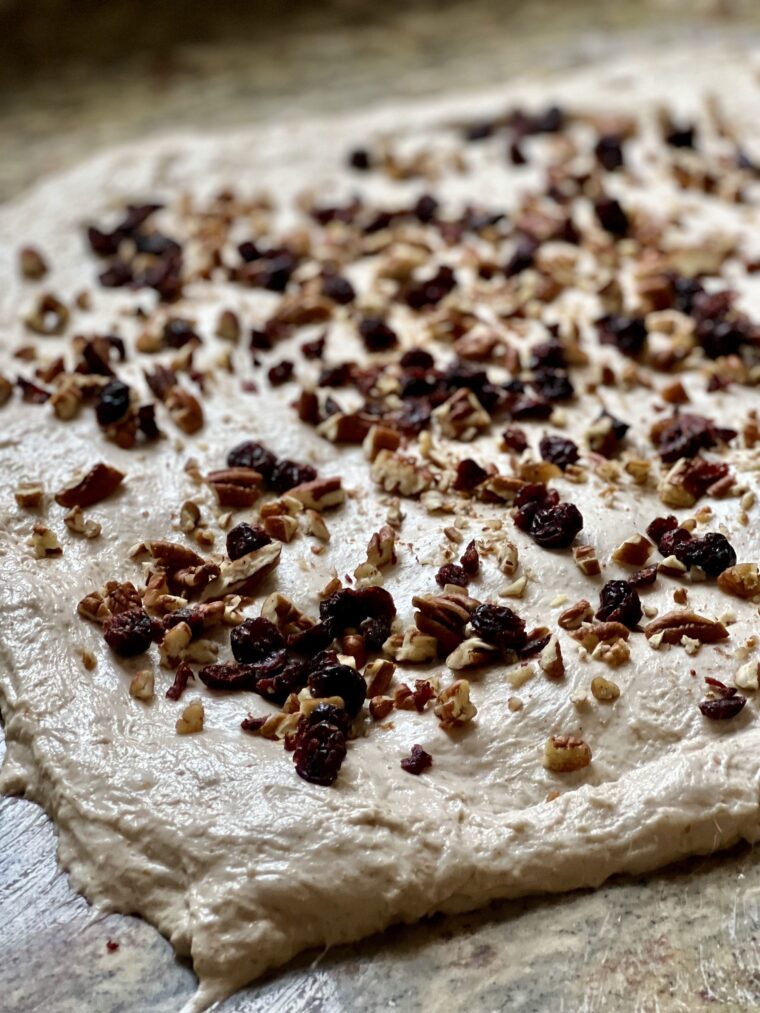
The bulk fermentation stage is where the magic happens. Over the next few hours, you will perform a series of stretch and folds. This process builds strength in the dough. After the third set, gently flatten the dough and sprinkle the cranberries and crumbled goat cheese over the surface. Fold the dough over itself a few times to incorporate the inclusions, being careful not to tear the dough. Let the dough continue to ferment until it has visibly increased in size and is light and airy.
Once bulk fermentation is complete, it’s time for shaping. Gently turn the dough out and preshape it into a loose round. After a 20-minute rest, perform the final shaping, creating a tight ball or oval. Place the shaped dough seam-side up in a floured banneton and transfer it to the refrigerator for its long, cold proof. The next morning, preheat your oven with the Dutch oven inside. Score the cold dough, transfer it to the hot pot, and bake. The transformation from cold dough to golden, aromatic bread is truly a joy to witness.
Variations and Creative Twists
This Cranberry Goat Cheese Sourdough is delicious as is, but you can easily adapt it to create new and exciting flavor combinations. Sourdough is a wonderful canvas for creativity.
Nutty Crunch: For added texture and flavor, fold in 50g of toasted, chopped walnuts or pecans along with the cranberries and goat cheese. The nuts add a lovely crunch that contrasts beautifully with the soft crumb and creamy cheese.
Herbaceous Twist: Add 1 tablespoon of fresh, finely chopped rosemary or thyme to the dough along with the salt. Rosemary and goat cheese are a classic pairing, and the herb adds a wonderful, savory aroma that makes this bread perfect for serving with soup or a roast dinner.
Sweet Loaf: For a sweeter version, perfect for toast or French toast, add 2 tablespoons of honey or maple syrup to the water when mixing the dough. You can also swap the goat cheese for cream cheese or even white chocolate chips for a decadent treat.
Different Cheeses: If goat cheese isn’t your favorite, try substituting it with crumbled feta for a saltier, sharper flavor, or cubed Brie for a milder, buttery richness. Just ensure the cheese is firm enough to hold its shape during the folding process.
Frequently Asked Questions
Working with sourdough and inclusions can bring up a few common questions. Here are the answers to help you achieve your best loaf yet.
Q: Why did my inclusions (cranberries/cheese) sink to the bottom?
A: This is usually a sign that your dough was not strong enough to support the weight of the inclusions. Ensure you are using high-protein bread flour and that you perform all the stretch and folds to build a strong gluten network. Also, make sure the inclusions are evenly distributed and not clumped in one area.
Q: Can I use a different type of flour?
A: While you can experiment, it’s best to stick to the recipe’s flour blend for the first attempt. Substituting too much all-purpose flour for bread flour will result in a weaker dough that won’t rise as well. You can, however, increase the whole wheat portion up to 30% for a nuttier flavor.
Q: How do I know when bulk fermentation is complete?
A: Bulk fermentation is complete when the dough has increased in volume by about 50-75%, looks visibly puffy, and has a dome shape. The “poke test” is also helpful: if you gently poke the dough and the indentation slowly springs back about halfway, it’s ready. If it springs back immediately, it needs more time; if it collapses, it’s over-fermented.
Q: How should I store this bread?
A: Store the cooled loaf cut-side down on a cutting board, or in a linen bread bag at room temperature for up to 3 days. Do not store it in the refrigerator, as this will cause it to stale quickly. For longer storage, slice the loaf and freeze the slices in a freezer-safe bag for up to 3 months.
Q: My crust is too pale. How can I fix this?
A: A pale crust is usually due to insufficient baking time or a lack of steam. Ensure your oven is fully preheated to 500°F and that you bake with the Dutch oven lid on for the first 20 minutes to trap steam. After removing the lid, bake until the crust is a deep, dark golden brown—don’t be afraid of color!
Conclusion
Mastering this Artisan Cranberry Goat Cheese Sourdough Loaf is a truly rewarding achievement. It’s a bread that showcases the best of what home baking can be: complex in flavor, beautiful in appearance, and deeply satisfying to eat. The combination of the tangy sourdough, the tart cranberries, and the creamy goat cheese is simply sublime, making it a perfect centerpiece for any gathering or a luxurious treat for yourself.
I encourage you to embrace the process, trust your instincts, and enjoy the journey of making this incredible bread. The aroma alone is worth the effort! Please share your baking photos and any questions you have in the comments below. I love seeing your beautiful loaves and hearing about your sourdough adventures. Happy baking!
Artisan Cranberry Goat Cheese Sourdough Loaf
Ingredients
Method
- In a large bowl, mix the flours and water until just combined (autolyse). Cover and let rest for 30 minutes.
- Add the sourdough starter and salt. Mix thoroughly until the dough comes together.
- Perform 4 sets of stretch and folds every 30 minutes. After the third set, gently fold in the cranberries, goat cheese, and nuts until evenly distributed.
- Allow the dough to bulk ferment at room temperature until it has increased in volume by about 50-75% (4-6 hours, depending on temperature).
- Gently turn the dough out onto a lightly floured surface. Preshape into a round and let rest for 20 minutes.
- Final shape the dough into a tight boule or batard and place it seam-side up in a floured banneton basket.
- Cover the banneton and cold proof in the refrigerator for 12-18 hours.
- Preheat your oven to 500°F (260°C) with a Dutch oven inside for 1 hour.
- Carefully invert the dough onto a piece of parchment paper, score the top with a sharp razor, and transfer it to the hot Dutch oven.
- Bake covered for 20 minutes. Reduce the temperature to 450°F (230°C), remove the lid, and bake for another 25-30 minutes, or until the crust is deeply golden brown.
- Remove the loaf from the Dutch oven and cool completely on a wire rack for at least 1 hour before slicing to allow the crumb to set.